
The week you should have stopped building
Pre-Series-A companies usually have either a distribution problem or a product problem. Rarely both. The one you don't have is the one you keep working on.
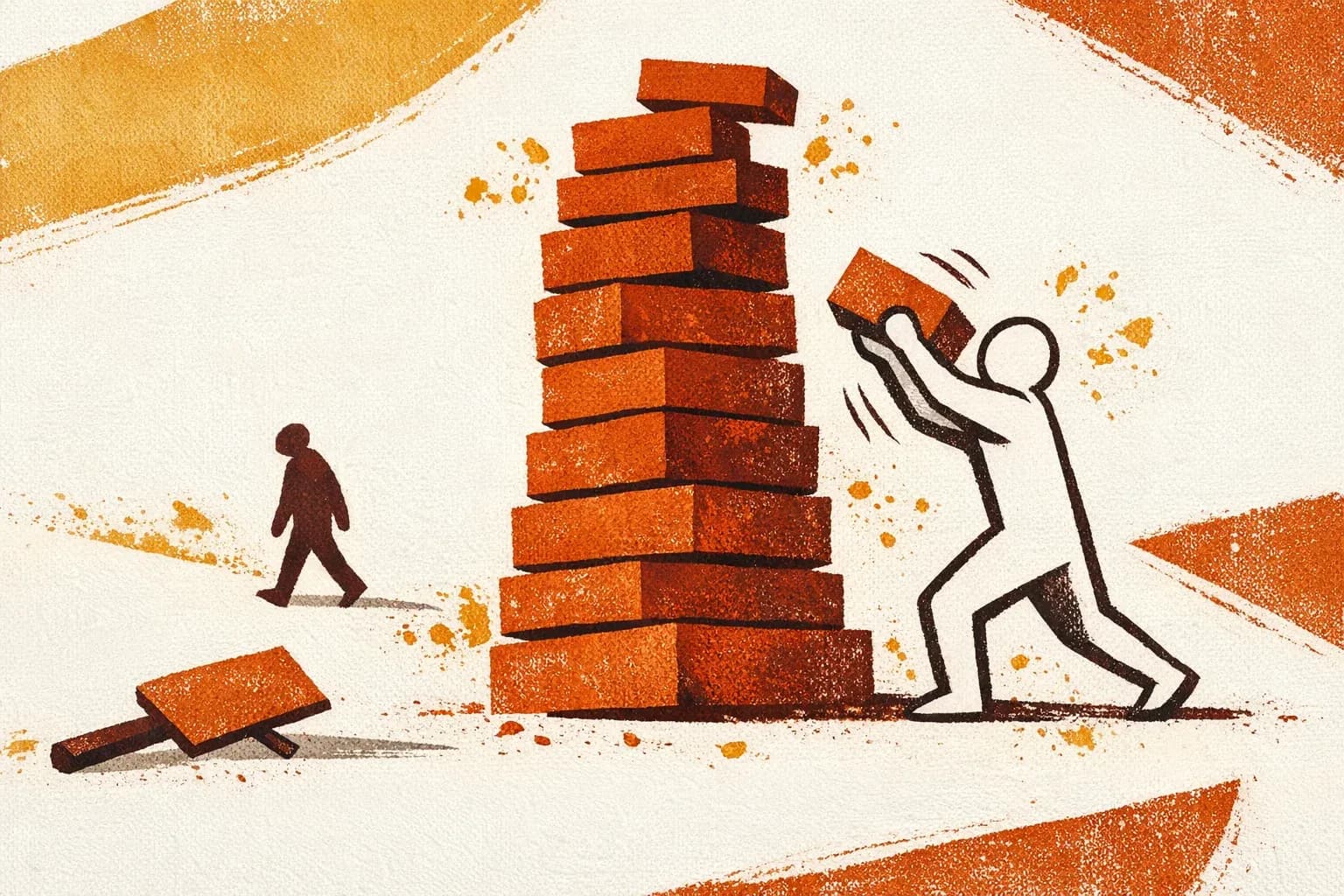
A founder books the call because 'traction is slow'. They describe the product roadmap. Three features shipping this sprint. A fourth lined up for next month. Customer feedback is 'mostly positive'. The team is 'shipping well'. And the pipeline hasn't moved in two months.
I can usually tell within five minutes of that conversation that the problem is not the product. The founder has been building, the team has been delivering, the velocity chart is healthy. But the growth curve is flat. The product team has answers. The distribution team, where there is one, has questions.
The asymmetric diagnosis
Most pre-Series A companies have either a distribution problem or a product problem. Rarely both at full intensity at the same time. The uncomfortable heuristic I've started using:
- If users who try it keep using it, but new users don't arrive: distribution problem
- If new users arrive, try it once, and never come back: product problem
- If neither: then yes, both. Usually in Series A territory this is more common.
The founder almost always knows which category they're in. They also almost always keep working on the other one, because it's the one the team is set up to solve.
Building (legible)
- Tickets closed, release notes posted
- Sprint velocity stable, retros healthy
- Product team on their plate
- Bugs measurable, scope defined
- Feels like progress from the inside
Distributing (messy)
- Cold email campaigns, 40 at a time
- Pricing experiments against real prospects
- Homepage rewrites and positioning tests
- Partnership conversations with no shape
- Wins harder to attribute, feedback slower
When the revenue chart is flat six months in, the constraint is almost always on the right side. Founders avoid it because building feels safer to run on a standup.
Why the wrong one is the comfortable one
Engineering teams know how to build features. Shipping features feels like progress. It's legible. There are commits, standups, release notes. Distribution work is messier. Cold outbound, content, partnerships, pricing experiments, positioning rewrites. The feedback loop is longer and the wins are harder to attribute.
So the team keeps building. The pipeline keeps not moving. The runway keeps shortening. Everyone feels busy.
What stopping looks like
I'm not saying shut the product team down. I'm saying: when you're six to nine months in and the chart's flat, it's worth spending one sprint. Just one. Where the team does zero feature work and the founder and one engineer do nothing but distribution. Cold email campaigns. Pricing tests. New positioning on the homepage. A partnership conversation.
If the pipeline moves, the diagnosis was distribution and the next three sprints follow that. If it doesn't, the product team goes back to work and the founder now has proof that the constraint isn't where they thought.
Every founder thinks their problem is the complicated one. Usually it's the boring one they've been avoiding.
Perspectives, by email
Get the next essay in your inbox.
One a fortnight, sometimes less. No nurture funnel. Unsubscribe in one click whenever it stops being useful.
Found this useful?
Thirty minutes. Free. No prep needed.
If the diagnosis is clear without me, you go do it. If not, we talk about the sprint. Either way, the first call takes 30 minutes and costs nothing.
Book the callKeep reading
All posts
Distraction has a CRM — it's called LinkedIn
Graham was right that competition doesn't kill startups. Distraction does. What he didn't say: distraction in 2026 has an interface, a notification schedule, and a search function. It's called LinkedIn.
The co-founder state-of-the-union
CB Insights has co-founder disputes as the second-most-cited reason startups die, sitting above cash. Most of those disputes were decidable twelve months earlier. Nobody had a forum.
Founder burnout as a cash equivalent
Fifty-four percent of founders report being burned out, per the 2025 Sifted survey. Stop treating this as a wellness issue. Treat it as a line item on the balance sheet. That's the only framing that makes the spend decision obvious.